TUCSON, Ariz. — For most of his life, Daniel Stoker’s music lived in places few people ever saw: notebooks, an old four-track recorder, voice memos scattered across years of smartphones, partial digital recordings, and rough demos.

After more than 30 years of songwriting, that private catalog is beginning to surface.
Stoker has written hundreds of songs a year, building a body of work that includes thousands of ideas, verses, hooks, chord progressions, and full compositions. His songs move across pop, rock, alternative, hip-hop, R&B, grunge, a cappella, and orchestral styles. Some call for soft, intimate vocals. Others need a rasp, a shout, a tight rap cadence, or a soaring chorus.
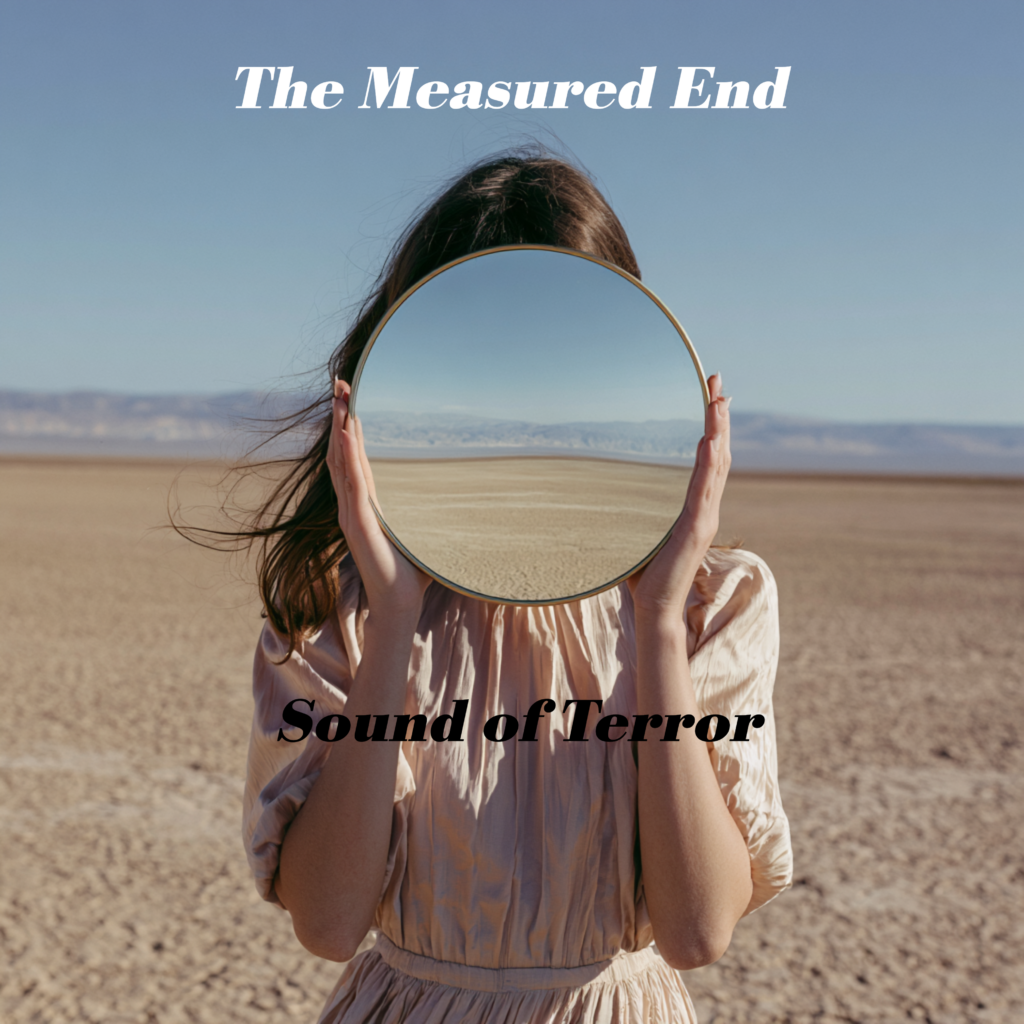
Now, with the release like “The Lateness of the Hour” and “Sound of Terror,” Stoker is using AI-assisted music tools to create polished demos of songs he has already written, not to write songs or lyrics for him. His hope is that these recordings will showcase his songwriting clearly enough for real artists, producers, labels, publishers, and music companies to hear the potential and imagine where the songs could go.
For Stoker, that distinction matters. He sees much of today’s AI music use as focused on generating songs, lyrics, and melodies from prompts. That is not his interest. The songs are his. The lyrics are his. The melodies and chord progressions are his. AI, for him, is just a production and demoing tool, a way to help long-written songs be heard.
It is also, he believes, a challenge to the old music studio model.
For decades, a lone songwriter like Stoker needed access to a studio, an engineer, a vocalist, money, time, and often a lucky connection just to present a song in a form the industry might take seriously. Now, AI-assisted production gives independent writers a better path to create high-quality demos on their own, not as a replacement for artists or studios, but as a way to get original songs in front of the people who can perform, record, license, produce, or develop them.
A songwriter first
Stoker’s path has never been about chasing the spotlight. He played in bands, performed live, and experimented with recording, but over time he realized the part he loved most was the writing itself.
“The only thing that I really found joy in was writing the music,” Stoker says.
His dream was not to become a famous front man. It was to write songs other artists could bring to life.
“My last gig was over 20 years ago, a three-hour set of original songs at a popular bar next to the University of Arizona that left me exhausted,” he says. “I just wanted to be home, writing music.”
That focus sharpened after an experience in his early 20s. One of Stoker’s songs had ranked in the top 10 among tens of thousands on GarageBand.com, a newly launched platform supported by George Martin. Stoker says he was invited to a major studio and drove to California expecting a meeting that might change the direction of his songwriting life.
But when he arrived, the meeting did not happen.
No sit down. No conversation. No chance to showcase the songs.
The experience left him disillusioned. If the gatekeepers were not going to let him in, he decided he would keep songwriting anyway but for himself.
“I’m just going to write music for my own, personal enjoyment,” he says. “But I still have the congratulatory email from George Martin for getting in the top 10. That is a treasure.”
The Writing Came Easily. Recording Did Not.
Stoker kept composing year after year, but turning the songs into recordings that matched what he heard in his head proved difficult. Based in Tucson, far from the major music label studio ecosystem he once hoped to enter, he tried working with audio engineers and investing time and money into recording projects. The results, he says, often failed to capture the quality of the writing.
One summer became a turning point. After spending months trying to record just five songs, Stoker felt the finished tracks still did not reflect what he had written.
For someone who found joy in creation, not production, traditional recording became friction. He would begin the process of tracking vocals or instruments, but the time, technical demands, and cost often pulled him away from what he most wanted to do: song-write.
“My heart was not in recording,” he says. “It was also a struggle finding the time and resources to learn the hardware and software. I didn’t want to be an audio engineer. I just wanted to be a songwriter.”
In the time it took to finish one track, he might write five more songs. That cycle kept the catalog growing, but largely unheard.
AI as a Demo Studio
AI-assisted production has changed that equation.
Stoker uses the technology to help turn songs he has already written into polished, professional-sounding demos. The tools can help with mixing, mastering, effects, vocal presentation, and production style, the kinds of support he once needed a studio or engineer to provide.
He is clear about the boundary: AI is not writing the lyrics, melodies, or chord progressions. It is helping present finished songs in a way that listeners, singers, producers, and music companies can immediately understand.
That includes vocal demos. Stoker has never wanted his own voice to be the final representation of every song. With AI-assisted tools, he can upload a complete song with his vocals, guitar, piano, or other parts, then use the technology to demonstrate how the song might sound with a different vocal style.
“I can upload a complete song with my vocals and perhaps I’m playing guitar and piano, and then I can instruct the AI to preserve my melody, all the dynamics, inflections, nuances of my singing, but replace it with a different vocal style or voice,” he says.
The result is not intended to replace human performers. It is meant to help them hear the song.
Stoker still prefers the idea of real artists recording his work. AI gives him a stand-in voice and a production path so the songs do not have to remain unheard while he waits for the right collaborator, studio budget, or professional vocalist.
“I understand there is some backlash for using AI in songs, and for some people, using AI in general,” Stoker says. “As a person who writes songs, stories, and has a theoretical, toy model universe for resolving the black hole information paradox, the introduction of mainstream LLMs felt like an attack on my creativity, my innovation, my entire existence.”
But his view has changed as he has thought more about what AI is actually doing.
“I’ve come to learn that LLMs aren’t ‘thinking’ so much as predicting,” he says. “They generate their output through probabilities for what text, audio, etc., is most likely to come next based on all of the data they’ve trained on. In terms of music creation, that ensures songs that will most likely sound familiar. It’s not producing outlier responses like breakthrough songwriters who throughout the years have created strong melodies that are also vastly different from what we’ve heard before.”
That is why he wants AI kept in its place: useful for production, not a substitute for songwriting.
“Essentially, all new technology comes with the question, ‘Will this hurt me more or help me more?’ and often that answer depends on you, your ability to adapt with the technology and use it to boost your goals in life,” he says. “I’ve chosen to use AI to help me achieve my artistic goals without compromising my artistic work. In other words, if I had access to a professional recording studio, I could get the same result. The AI is technically not necessary. It’s just very helpful. And if anyone doubts that these are my songs, I’m keeping my AI account active forever as it shows how every song is uploaded for the AI to help master, never once have I asked AI to create a song or lyrics. And I also have my songs recorded as voice memos on several iPhones, going back years, before these AI tools were available.”
A Challenge to the Major Music Studio Pipeline
For Stoker, AI-assisted demoing is not just a personal convenience. It represents a shift in who gets to enter the conversation.
The traditional music industry has long depended on filters: studios, labels, producers, managers, publishers, engineers, and access to professional recording environments. Those filters can help shape great music, but they can also keep songs from being heard at all, especially when the songwriter is not a performer, does not live in a major music city, or lacks the budget to produce studio quality demos.
Stoker sees AI changing that first step. A songwriter no longer has to arrive with only a notebook, a rough voice memo, or a homemade recording that asks listeners to imagine the finished version. With AI-assisted production, a lone writer can present a song in a fuller form, with enough polish, structure, vocal style, and sonic clarity for artists and companies to evaluate it on the strength of the writing.
That does not mean major studios become irrelevant. To Stoker, the more interesting possibility is that the relationship changes. Studios, producers, publishers, sync companies, labels, and artists could receive better-developed material from independent songwriters who were previously invisible. Instead of AI replacing the industry, it could widen the doorway into it.
The challenge is to the gatekeeping, not to the value of collaboration.
In Stoker’s view, the old system often required a songwriter to be discovered before the songs could be properly heard. AI-assisted demoing reverses part of that process. It allows the songs to be heard first, in a form closer to what the writer intended, and then gives artists and companies a clearer reason to engage.
That is especially important for someone like Stoker, who never wanted to be the final performer. His goal is not to bypass singers, bands, producers, labels, or music companies. It is to reach them with demos strong enough to start a real conversation.
He also sees an irony in the criticism of AI-assisted production.
“I also understand that professional recording studios are also using AI to help hear songs and flesh out effects, styles, variations, as well as in final production,” he says. “So that’s the irony of it. If I was invited to a major studio, I would probably be passing my songs to an engineer doing the same thing I’m doing with the AI.”
That irony points to the larger challenge. If major studios are already using AI to refine, test, and produce music, Stoker believes independent songwriters should also be able to use similar tools to prepare their work for the industry. The difference is access. What once required a studio appointment can now begin in a songwriter’s home.
For Stoker, that makes AI less of a threat to music than a potential equalizer, provided it is used to amplify human songwriting rather than replace it.
Four Albums From a Lifetime of Songs
That shift has already led to four albums: “The Lateness of the Hour,” “Sound of Terror,” “In Theory,” and “Lasting Impressions.” Together, they turn decades of private songwriting into a visible catalog, with each album drawing from a different period of Stoker’s life.
The albums also show the range and longevity of his work. “Lasting Impressions” gathers songs written in the 1990s, capturing the earliest phase of his songwriting. “In Theory” reflects songs from the 2000s, while “Sound of Terror” features material written in the 2010s. “The Lateness of the Hour” brings the catalog into the present, with songs written in the 2020s.
Taken together, the albums play like a time capsule, a songwriter moving through decades, styles, and life stages while maintaining the same habit of making music because he loves it and, as Stoker puts it, because he “can’t not write music.”
Stoker also has two additional albums currently in progress, including a collaboration with a friend who has taken on the role of lyricist. “It’s great working with him, I can pass him songs that need lyrics or he can pass me lyrics that need a song. In some cases I can pull from existing melodies or I may find the inspiration to write something entirely new.”
For him, the releases are proof that the songs exist, that the catalog is real, and that the work was not a short burst of creativity. It is a sustained body of work that he now hopes can reach beyond his private life.
He calls it “a chance for my songs to now live on beyond me.”
Looking for Artists, Not Algorithms
Despite the AI-assisted production, Stoker’s ideal outcome remains human collaboration.
He wants singers, bands, performers, producers, publishers, labels, sync companies, and other music businesses to hear his songs and imagine where they might fit. If his music generates attention, he hopes it leads not just to streams, but to connections, the kind where an artist hears a song and says, “That one is mine.”
In that sense, the AI-assisted recordings are both a showcase and an invitation. They are Stoker’s way of saying the songs are here, they have always been here, and now they can finally be heard clearly enough for someone else to imagine singing, recording, producing, licensing, or developing them.
For a songwriter who once drove to California hoping for a studio meeting that never happened, that matters. AI-assisted demoing gives him a way to put the song first. Not the meeting. Not the gatekeeper. Not the industry credential. The song.
A Call to Hidden Songwriters
Stoker also wonders how many other songwriters have spent years creating in private. not for fame, but because they felt it in their heart, they could not stop writing.
He imagines people with songs stored in notebooks, phones, hard drives, old recordings, or voice memos. Songs they listen to while driving. Songs they wrote long before AI entered the conversation. Songs with original lyrics, melodies, and chord progressions that never reached listeners because production was too expensive, too technical, or too dependent on finding the right collaborators.
For those writers, he sees a meaningful use for AI: not generating the song itself, but helping finish and present what already exists.
That, for Stoker, is the real shift. Independent songwriters no longer necessarily need a perfect studio situation, a major-label connection, or a lucky break just to let their work be heard. They can create demos strong enough to approach artists, producers, publishers, labels, and companies with something more complete than a promise.
In Tucson, where he has spent decades writing largely out of view, the barrier between song and listener finally feels manageable.
And after a lifetime of melodies that mostly stayed private, that may be the biggest change of all.
“Ultimately, I do agree that we shouldn’t be using AI to song-write, because at scale it can add a lot more volume to what’s already most typical, instead of amplifying the rarer, human-specific creative leaps,” Stoker says. “I believe it should be confined to a tool for assisting in producing, not writing. In other words, ‘We are the music-makers. We are the dreamers of dreams.’”